

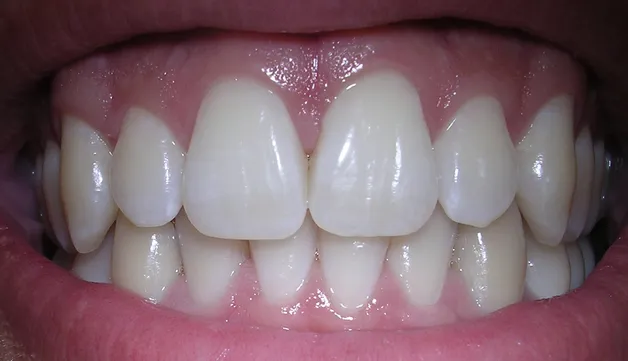
Use ‘em Right
Section titled “Use ‘em Right”In the case of your teeth, this means using those teeth to chew on whole foods rather than processed foods. Fresh vegetables, fruit, fish, chicken, healthy meats, beans, nuts, eggs, milk and cheese give you the nutrients you need to maintain healthy teeth. These natural foods also lead to a proper environment inside your mouth.
This means an environment free of excess sugar and resulting acidity.
Avoid Sugar
Section titled “Avoid Sugar”That’s right.
Sugar in your diet encourages the development of a bacterial environment that increases acidity in your mouth.
Acidity promotes production of biofilm, plaque, and decay.
We’re not just talking white sugar in a bowl. Processed foods, even those that don’t taste sweet, usually contain sugar.
Check out the label if you have doubts about this.
Even natural sugars such as those in fruit juice and honey tend to produce a more acidic environment in the mouth.
Safe sweeteners
Section titled “Safe sweeteners”- Xylitol- This is a natural form of sugar which actually seems to impede tooth decay. Many dentists recommend use of a xylitol mouthwash several times each day.
- Stevia- Stevia is the name of a plant which contains a protein in its leaves which is naturally sweet and now available in most grocery stores
- Artificial sweeteners- Check out your favorite on Wikipedia. While there have been allegations of danger from these, they are much safer than tooth decay or weight gain.
Drink Water
Section titled “Drink Water”It is naturally sugar-free and goes well with meals. Most diet drinks are carbonated, acidic and hazardous to your teeth—even if the label says “sugar free.”
Minimize Snacks
Section titled “Minimize Snacks”You will have healthier teeth by limiting food to mealtime. Your mouth then has a chance to restore a more normal environment between meals. When you snack, it takes a couple of hours for the acidic effect of the food to wane and for the pH in your mouth to return to neutral.
Remember, an acid pH tends to remove mineral from your teeth.
If you must snack, try fiber-rich foods.
These have a detergent effect in the mouth and get saliva flowing.
This restores the normal environment of the mouth.
Fiber-rich fruits include raspberries, pomegranate, persimmon, kiwi fruit and pears. Cheese, milk and plain yogurt provide calcium as well as promoting the flow of saliva.
Green and black tea favorably influence plaque bacteria. Sugarless chewing gum removes food particles and increases the flow of saliva.
The Zen Rule: Let Your Dietary Choices be Determined from Within
Section titled “The Zen Rule: Let Your Dietary Choices be Determined from Within”Letting your diet be determined by advertisements challenges the natural healing mechanisms that keep your mouth healthy.
Don’t do it!
Keep ‘em Strong
Section titled “Keep ‘em Strong”Every bodily system has inborn self-repair mechanism. When we are injured or ill we repair ourselves, even from emotional injury.
Only after many decades do these systems weaken and we die.
Even your teeth, under proper conditions, can re-mineralize and become stronger.
Don’t get in the way!
Swish for a Healthier Mouth
Section titled “Swish for a Healthier Mouth”In fact, you can help your teeth self-repair.
Here are several methods.
Swish after eating or drinking with an alkaline rinse.
Make this by adding four level teaspoons baking soda to 16 ounces of water.
An alternative to this would be a commercially available xylitol mouthwash; Spry is one such brand.
Swish twice a week with a dilute Clorox rinse to maintain healthy gums.
Make this by adding one teaspoon bleach to 1 cup of water. Take a sip, swish for 30 seconds, and spit without rinsing your mouth afterwards.
Twice a week; that’s it.
Summary
Section titled “Summary”- Drink lots of water.
- Eat healthy food and don’t eat harmful food.
- Avoid snacks.
- Swish your mouth after eating or drinking.
Image Provided by Wikimedia Commons, courtesy of David Dewitt