

The silver lining on the dark cloud of COVID-19 is the new class of vaccines developed for it, and developed in record time.
How fast? Here is what has happened with COVID-19.
- January 3rd. Professor Zhang Yongzhen of the Shanghai Public Health Clinical Center receive viral material taken from a patient in Wuhan with an unusual form of pneumonia, later determined to be a new illness called COVID-19.
- January 5th. After 2 days of continuous work, he and his team sequence the virus, a new one called SARS-CoV2. Per usual protocol, he immediately shares that genetic information with the National Center for Biotechnology Information in Maryland. He informs his colleagues in Wuhan that the virus is similar to SARS and probably uniquely dangerous.
- January 10th. At the request of an Australian colleague, Zhang sticks his neck out and authorizes public release of the sequence, an action which gets him into temporary trouble with his superiors.
- January 13th. Moderna finalizes the design of its mRNA-1273 COVID-19 vaccine.
- February 7th. The first batch of the vaccine is completed and biochemical analysis and animal testing begin.
- March 16th. Clinical trials on human volunteers begin.
Got that? Moderna gets the sequence of the virus and has a vaccine designed in three days and into someone's arm 62 days later.
Because no mRNA vaccine has ever been approved before, it took us about 9 months to convince ourselves this new technology was safe. If this new technique is as successful as we expect, vaccines for new illnesses can be produced in a matter of months rather than a matter of years.
How does immunization work, anyway?
Section titled “How does immunization work, anyway?”When a person catches an infection, one of three things can happen. Using smallpox as an example...
- They die of smallpox, as did untold thousands of Native Americans when the Europeans brought smallpox with them.
- They recover with side effects such as blindness, brain damage or male sterility.
- Their immune system mobilizes fast enough to ensure full recovery. In this case, the immune system memory cells forever retain the ability to prevent smallpox from getting started in that person again.
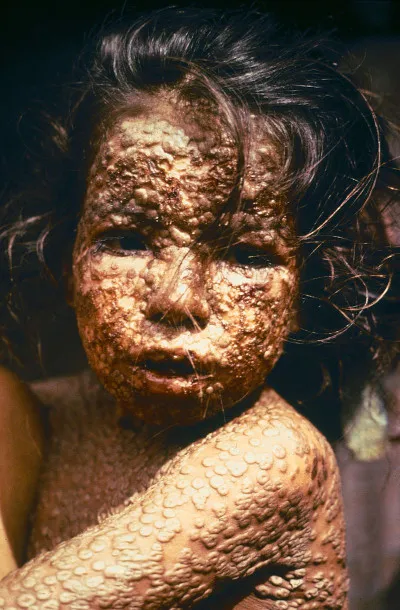
Smallpox has killed millions of human beings. Here's a child in Bangladesh with smallpox in 1973. Let us hope she survived.
We were able to prevent smallpox by scratching smallpox or cowpox virus into the upper arm, causing a local, dime-sized area of infection.
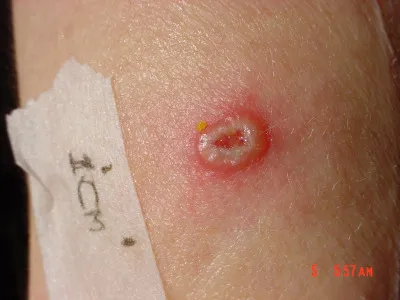
Author photo. Tape reads “1 cm”.
This localized infection resulted from intentional penetration of the skin with either of the following:
- A weak version of the human smallpox virus
- A similar virus that infects cows, called cowpox, that does not harm us
As our immune system fights off this localized infection, it develops the ability to kill this virus, an ability it never forgets.
The bright-eyed Bangladeshi pictured above was one of the last humans to suffer from smallpox. Worldwide immunization efforts eradicated smallpox, the last known case occurring in Somalia in 1977.
How Immunization Works: Current Technology
Section titled “How Immunization Works: Current Technology”Until this year, current immunization technology involved injecting people with a weakened or killed version of the microbe in question. Our immune system develops a reaction to this foreign material, and when challenged with the naturally circulating microbe, quickly responds and prevents infection.
There are several problems with this.
- We need to mutilate the dangerous microbe so that it does not cause infection, but not so much that it is too different from the natural virus. If it differs too much, our immune system does not develop an effective response.
- We need to mutilate the microbe in such a way that it does not upset the immune system in a dangerous way or cause an overreaction.
- Some microbes, such as the bacteria which cause pneumonia, also contain carbohydrates. These increase the difficulty of developing a safe vaccine.
2020 Technology: mRNA Vaccines
Section titled “2020 Technology: mRNA Vaccines”mRNA Vaccines have been under development for about 15 years. We are now seeing their first use to prevent illness. There are two parts to this vaccine.
The Envelope—A Lipid Nanoparticle
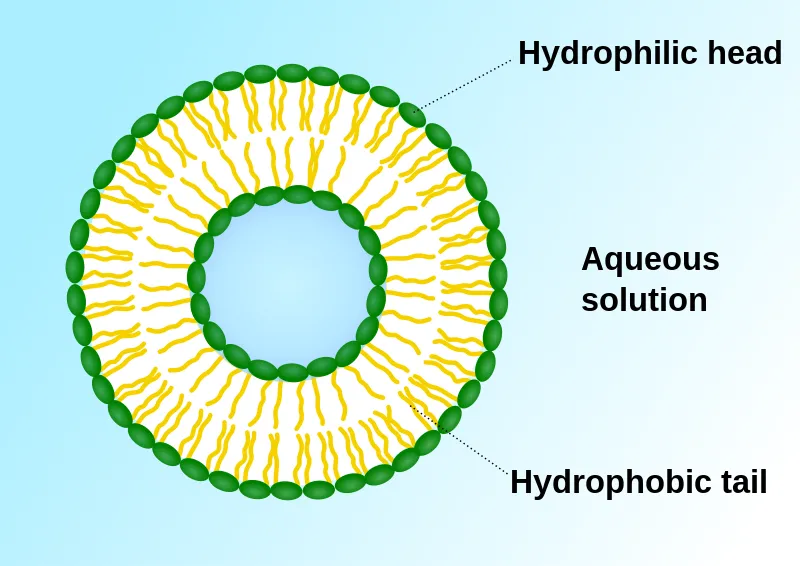
Section titled “The Envelope—A Lipid Nanoparticle”Look up the labeled terms if you wish—basically, this mimics a standard cell wall with water around it and water inside. This is engineered to be injected into a muscle and carry a disease-preventing substance into the cell.
The Contents—mRNA
Section titled “The Contents—mRNA”This image shows how the DNA uses mRNA to build human tissue, including all the parts of the immune system.
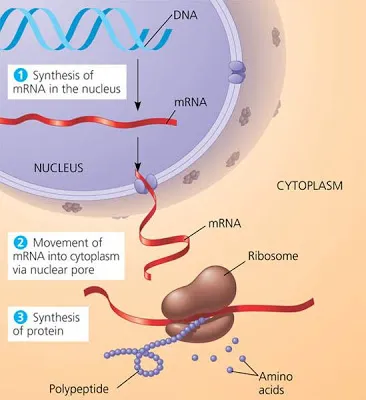
Do you want to see creation in action? This three-minute video is thrilling.
The Vaccine in Action
Section titled “The Vaccine in Action”For the COVID-19 vaccine, mRNA that will direct us to develop immunity is placed inside the lipid nanopartical carrier and injected into the body. As shown above, our cells will use that mRNA blueprint to build a part of the SARS-CoV-2 virus that cannot cause disease, but will stimulate us to develop immunity.
This image shows the sequence.
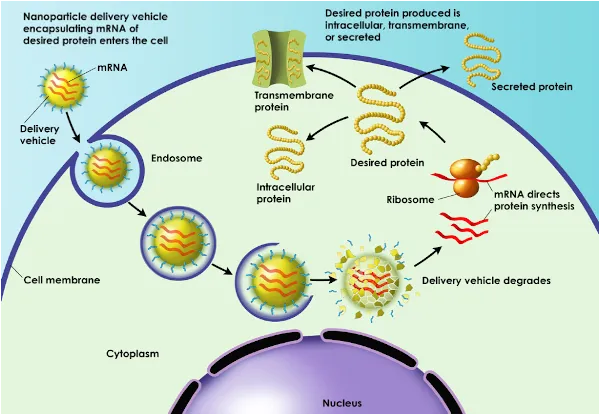
On the upper left you see what you received with your jab, which is the mRNA blueprint in the nifty lipid nanoparticle envelope. The cell absorbs this, opens the envelope, and uses the mRNA blueprint to build the spike protein of the virus. This leaves the cell at upper right and folds itself up into the form of the spike protein as pictured below. (labelled spike glycoprotein)
Please note that the mRNA in the vaccine does not enter the nucleus of the cell and does not change the DNA.
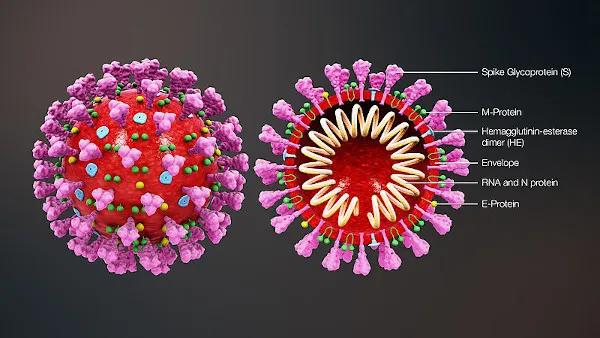
Older technology would've involved chemically degrading the virus so it could not reproduce, and using that for the jab, with all the short comings listed previously. Here, only the blueprint for the spike protein is injected. This is much cleaner and more elegant. The spike protein is unable to cause any infection, but is abundantly able to stimulate our immune system to develop an immunity to COVID-19.
The tan-colored coil of the coronavirus's own RNA, pictured here, something quite dangerous to us, exists only on a piece of paper in the vaccine designer's waste basket. To repeat, mRNA vaccines do not use a live virus and carry zero risk of causing infection.
To give credit to those who designed this vaccine...
- Figuring out how to make the lipid nanoparticle was tricky.
- The spike protein blueprint isn't straighforward.
- Hungarian-American biochemist Katalin Karikó will probably win a Nobel Prize for figuring out how to engineer the mRNA payload.
mRNA Vaccine Benefits
Section titled “mRNA Vaccine Benefits”mRNA vaccines are cleaner, containing only a standard envelope with the microbe's blueprint inside. So, no naked and dirty mixture of killed bacteria or virus, just one clean envelope.
This lipid nanoparticle can also safely carry blueprints for other infections—researchers are working on rabies, Zika, cytomegalovirus, and influenza.
Read about work to use mRNA technology for heart failure, cancer treatment, and other illnesses.
Is it Perfect?
Section titled “Is it Perfect?”We docs are still working on perfection and haven't yet gotten there—you've probably noticed. This COVID vaccine, either the Pfizer or Moderna version, is more than good enough, however. While it is tragic that COVID-19 escaped the genie's bottle here in America, the high prevalence of this infection allowed us to observe many cases of COVID-19 in the placebo groups and very few in the immunized groups. We were quickly able to see how effective the vaccine is.
Jefferson HealthCare and our County Health Department have been burning the midnight oil to arrange the priorities for recipients and organize a system that's simple and safe.
My first jab went without a hitch and I feel blessed to have received it.
When your turn comes, please consider my two thumbs up. We'll do our part to see that you get it.
Subscription to Medicine for People! is Free
If you think a friend or family member would enjoy our newsletter, please encourage them to sign up at https://pairlist2.pair.net/mailman/listinfo/medicine-for-people .
Thank you!
= Appreciation to Jill Buhler Rienstra and Michael Rienstra for editorial help. =