

Brain Health As We Age Part Six -- Microinflammation and the Brain
Section titled “Brain Health As We Age Part Six -- Microinflammation and the Brain”Hang in there, Dear Reader
Section titled “Hang in there, Dear Reader”Our goal in this series of newsletters on brain aging is to give you a detailed picture of the brain - how it is structured and how it works. At the end of this series, we will outline a plan to help you maintain your mental function as you age. Because this plan will differ in many regards from what you may be reading elsewhere, we want to give you information you can use to evaluate this or any other plan. If you are new to the newsletter, you can catch up by going back to our February issue and reading through the previous installments. Or, for a refresher, go to our one-paragraph review of the "Brain Aging" series here.
In this article we will take a closer look at microinflammation. Last month we explained that microinflammation results from the immune system's response to stress and irritation. The white blood cells and other fighter mechanisms respond to chemical distress signals. Sometimes these signals build on each other, creating an on-going state of low-grade immune system activation, called microinflammation. It appears that microinflammation, and all that causes it, increases aging both of the blood vessels and the neurons. It is the major player in arteriosclerosis, which impedes blood flow to the brain, causing impaired thinking. This same process harms the brain directly, even if blood flow remains normal. It does so by activating the glia.
What the Heck is a Glia?
Section titled “What the Heck is a Glia?”In addition to its 100 billion neurons, the brain also contains 10 to 50 times that many supporting cells, which provide physical, biochemical and functional support for the neurons. These cells are glia, and here's a picture of them. We're going to concentrate on just one type of glia, but to learn more about the other types, click here
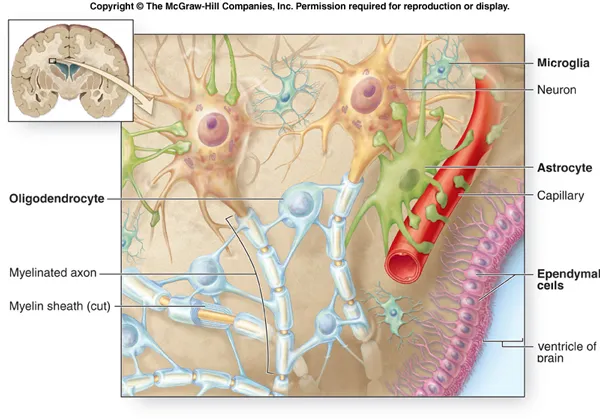
This wonderful image from McKinley/O'Loughlin Human Anatomy appears by generous permission of the publisher, McGraw-Hill.
Microglia
Section titled “Microglia”To understand the ravages of microinflammation, we need to look specifically at the microglia, the small blue cells in the upper part of the image above. Microglia provide immune defense to the brain. Their job is to respond to alarms and clean up trouble. When everything is calm and peaceful, they rest. But when they receive a signal that there is a sick neuron, they change shape and destroy it.
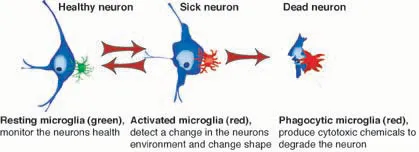
Source: www.powmri.edu.au/research/pdda/pdrd/cellular/ipd.htm
When Good Microglia Go Bad
Section titled “When Good Microglia Go Bad”Cleaning up a couple of bad neurons is a good idea, but if your microglia get carried away and destroy your good neurons, you're in trouble. In short, microglia hold the capacity to cause dementia, including Alzheimer's disease.
Once the microglia get activated, watch out! Microglial activation is something like a grass fire. It may go out when a particular patch of damaged neurons is removed, or it may rumble on. It depends on what kind of signals the microglia receive. If infection or stress have thrown your body into a state of low-grade inflammation, the microglia pick up on the background signals and the grassfires in the brain are likely to burn longer and destroy more neurons.
To discover how important inflammation is to dementia, investigators studied some 1700 patients over a period of fifteen years. They found that those who took anti-inflammatory drugs such as ibuprofen and naproxen for two years or more developed Alzheimer's dementia at only 40 percent the rate of people who did not. Acetaminophen (which has no anti-inflammatory properties) had no protective effect. Several other studies have found the same benefit. Reduce the inflammatory background in the system and you have less activation of microglia in the brain (thus less dementia) and less activation of white cells in the endothelium (thus less arteriosclerosis.) Because anti-inflammatory drugs can cause serious side-effects and because there are better ways to achieve the same goal, we do not suggest them as a preventive measure suited to the average person.
In a more dramatic study, Edward Tobinick, MD, of UCLA, reported in Medscape General Medicine on 15 people with well-established Alzheimer's dementia. Usually no medication can reverse this. He injected a TNF-alpha inhibitor (TNF-alpha is one of many inflammatory signals used by the immune system and by microglia) into the back of the neck near the spinal cord every week and noted improvement in cognitive ability after the first month. The improvement persisted for the six months that the injections were continued.
What Activates Microglia
Section titled “What Activates Microglia”Genetic
Section titled “Genetic”People who are carriers of a certain type of gene for Apolipoprotein E (ApoE) are more likely to form certain proteins in the brain when neurons die. These protein structures we call amyloid plaque and neurofibrillary tangles. Pharmaceutical researchers are working on drugs to target this system, but we will not discuss it further here because currently there are more practical ways to prevent dementia.
Trauma to the head
Section titled “Trauma to the head”The repair of trauma involves an inflammatory response, and that is what activates microglia. Wear your bicycle helmet and fasten your seat belt to avoid "post-concussion syndrome," characterized by poorer memory and poorer cognitive ability. This may be boxers, such as Mohammed Ali, risk dementia.
Temporary interruption of blood flow
Section titled “Temporary interruption of blood flow”Temporary interruption of blood flow reduces the oxygen supply to mitochondria inside the neurons and increases their output of free radicals. Free radicals stimulate the microglia.
Infection
Section titled “Infection”Microglia exist to combat infection in the brain. They will destroy whatever they have to, including neurons, to remove that infection. Infection anywhere in the body increases the levels of inflammatory signals in the blood stream, some of which will cross the blood-brain barrier and make the microglia jumpy.
Toxins
Section titled “Toxins”The movie "Awakenings" described the dementia brought about by the neurotoxin MPTP, an impurity sometimes produced during the kitchen manufacture of hallucinogens. Less dramatic, but more important, is the subtle and ongoing stimulus given to our microglia by pesticides. Dieldrin, for example, is a lipid-soluble toxin. It dissolves in fatty tissue, in which our brain is rich. It lasts a long time in that tissue, not washing out easily in the watery blood that rinses our system. In one study, dieldrin was found in six of twenty brains of Parkinson's patients and in none of controls. Besides dieldrin, solvents and industrial chemicals can activate the microglia.
People with certain genetic variations in the ability of their liver to detoxify drugs and chemicals are at greater risk of dementia from this cause. Your physician can provide detailed tests of your detoxification system.
Smoking
Section titled “Smoking”Smoking delivers toxins to the brain. Smokers are three times as likely to develop Alzheimer's dementia as non-smokers and twice as likely to develop vascular dementia. Smokers who take the antioxidant vitamin C cut their risk somewhat.
Hormones
Section titled “Hormones”Women who take supplemental estrogen develop Alzheimer's dementia less than half as frequently as women who do not. For more details, click here.
Also, dehydroepiandrosterone (DHEA), and melatonin have microglia calming effects in animals, but evidence is mixed in human studies. You only make melatonin when you are sleeping in the dark, so the best thing you can do to maintain healthy melatonin levels is to get good sleep, during the night.
The Inflammatory Clock
Section titled “The Inflammatory Clock”So far, we've described the inflammatory background that we live in each day of our lives. This clock ticks inexorably on 'til our end. We've pointed out that the higher that background inflammation, the more quickly our biologic life clock ticks. We've noted the changes that time and inflammation bring to our blood vessels and to the microglia in our brains.
Now let's put the frosting on the cake.
Drowning in Sugar
Section titled “Drowning in Sugar”The final factor that activates microglia is the sugar that you consume. Sugar and other sweeteners, such as corn syrup, honey, molasses and so on have so many effects on the system that they deserve the spotlight before we close our story of inflammation and dementia.
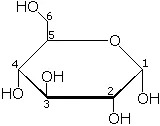
Glucose is a fuel, but it is also likes to combine chemically with proteins. This process is called glycation. It occurs everywhere in your body, including your blood stream. Normally, about 5 percent of your hemoglobin has been glycated; it has formed a chemical compound with glucose. When your average blood sugar is high, as with diabetes, more hemoglobin is glycated. There is a blood test available that can determine your percentage of glycated hemoglobin. The good news is that glycation appears not to impair the ability of hemoglobin to carry oxygen. The bad news is that glycation occurs in many if not all proteins and can cause those proteins to fail in their function.
How Glycation Affects the Brain
Section titled “How Glycation Affects the Brain”Activates microglia
Section titled “Activates microglia”In the brain, glycated proteins activate the microglia. This is why people with diabetes are about twice as likely to develop Alzheimer's dementia.
Harms Blood Vessel Lining
Section titled “Harms Blood Vessel Lining”Remember the endothelium that lines all our blood vessels? Glycation of endothelial proteins sets off microinflammation there and increases the risk of arteriosclerosis.
Stresses Mitochrondria
Section titled “Stresses Mitochrondria”When blood glucose rises, intracellular calcium rises. Too much calcium stresses the mitochondria that fuel our mental process. At the same time, intracellular magnesium, which protects those mitochondria, falls. Too little magnesium leads directly to higher blood pressure, increasing shear stress in the arterial wall. That trauma irritates immune cells, so they damage the blood vessels, and you know what happens next.
Raises Level of Microinflammation
Section titled “Raises Level of Microinflammation”Increased intracellular calcium also increases production of C-reactive protein, raising our background level of inflammation - which, of course, fans any microinflammatory grassfires in the brain and blood vessels.
Fructose
Section titled “Fructose”Fructose is a sugar found in fruit. We encourage you to eat fruit. For you molecule fans, here's a picture of fructose.
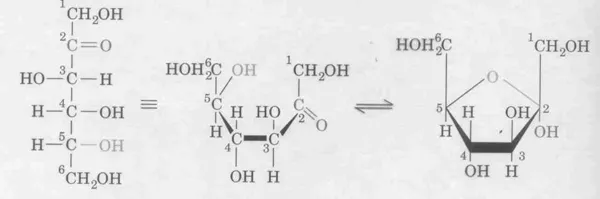
Do not, however, confuse fructose in fruit with high-fructose corn syrup. This sweetener, found in many commercial food products, provides us with unnaturally large amounts of this sugar. The jury isn't unanimous yet, but high fructose corn syrup is probably is a major factor in our obesity epidemic. Like glucose, it contributes to intracellular magnesium loss. Intracellular magnesium loss accelerates many elements of the aging process.
Other Dietary Sweeteners
Section titled “Other Dietary Sweeteners”The glycation problem with sugar, honey, and high fructose corn syrup does not apply to some no- or low-glucose natural sweeteners such as stevia and brown rice syrup. Brown rice syrup, for instance, contains only 3 percent glucose and has 50 percent complex carbohydrates. When evaluating the claims of other "natural" sugars, try to determine their percentage of glucose and fructose.
Summary
Section titled “Summary”We've shown that microinflammation damages the brain in two ways. It activates microglia to destroy neurons. It promotes arteriosclerosis, which reduces blood flow to the brain.
In this newsletter we've pointed out that most refined sugars, including high-fructose corn syrup, tend to promote the microinflammatory process. The risk is different for different people. People who tend to hold their weight and increase it, who tend to gain weight around the middle, do that because they are already producing too much glucose internally. When they eat refined sugar, they can increase their internal glucose load beyond a critical level. There is a certain point at which the internal glucose load alters the metabolism, leading to uncontrollable hunger and increased weight. Overweight people tend to have musculoskeletal pain because fat cells create inflammatory signals, such as interleukin-1 and C-reactive protein.
People who are physically very active need to eat refined carbohydrates in order to remain active. They, and their thin but perhaps less active friends, tend to burn sugars quickly before they accumulate and glycate those proteins.
What You Can Do
Section titled “What You Can Do”- Ask your doctor for a HgbA1C test to find out how well you are doing regarding tissue glycation.
- Replace sugar-filled sweets with apples, strawberries, raspberries, bananas, peaches, pears, plums and other fruit.
- Get plenty of exercise. This helps control your blood sugar level and reduces microinflammatory signals in general. You are almost certain, as a side effect, to feel better.
Where We Go From Here
Section titled “Where We Go From Here”Next month we may take a break from brain aging and instead share our views on health care finance reform. Our next issue on brain aging will address folic acid and other vitamins that are critical to the issue of dementia.
A Question for the Reader
Section titled “A Question for the Reader”You may have heard that the major newsmagazines and newspapers write their material so that it can be understood at a fifth-grade reading level. At that reading level, we would require hundreds of pages to communicate the concepts we want to get across. Carolyn, our editor, is working with me to achieve reasonable brevity while not dumbing down our material. Please let us know how this is working for you.
I would like to acknowledge and thank David Perlmutter, MD, a neurologist in Naples, Florida, who first introduced me to the term "Brain on Fire" and the concepts involved.
This newsletter provides links to Amazon.com as a reader convenience. We have no financial relationship with that company.